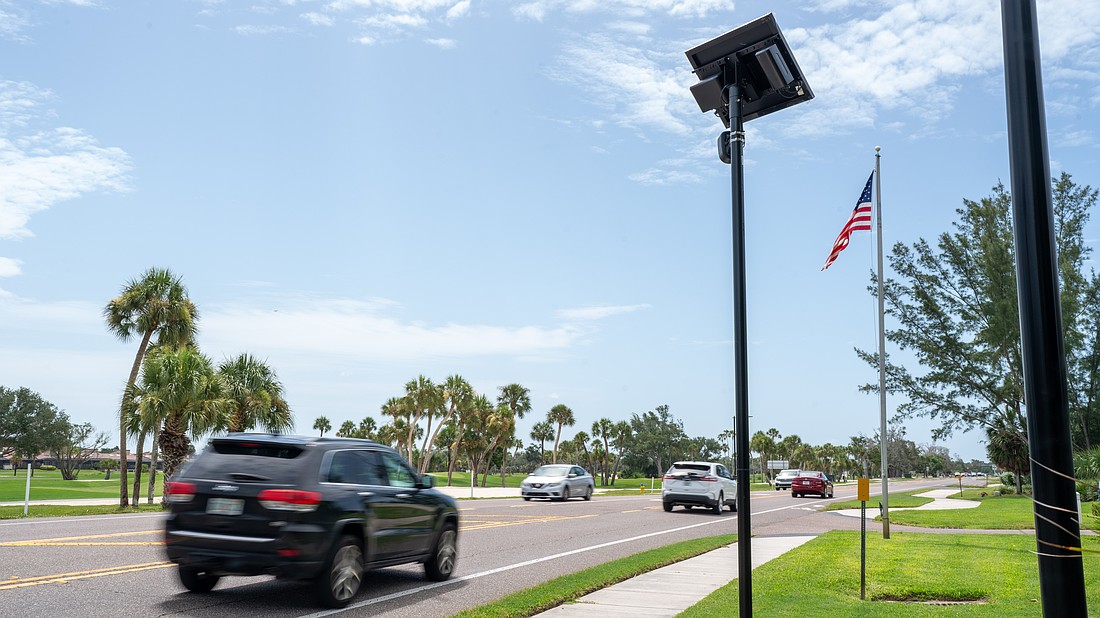
The open road has long served as a quintessential symbol of American freedom—the idea that an individual can travel peacefully without having to show their papers or justify their presence to the state.
That freedom is quietly being dismantled. Across thousands of towns and cities, a sprawling web of Automated License Plate Readers (ALPRs), motion sensors, and AI-driven camera networks—spearheaded by private surveillance vendors like Flock Safety—is transforming public thoroughfares into a virtual checkpoint system.
Marketed under the familiar promise of “eliminating crime,” these systems operate on a premise completely alien to a free society: treating every citizen as a perpetual suspect whose movements must be logged, indexed, and stored.
From Specific Suspicion to Digital Dragnets#
Traditional policing and constitutional law historically required individualized suspicion. If the state wanted to track someone, monitor their travels, or conduct a search, it had to demonstrate probable cause to a neutral magistrate and obtain a specific, targeted warrant.
ALPR systems flip this standard upside down:
- Indiscriminate Logging: Solar-powered cameras photograph every single passing vehicle—capturing license plates, make, model, color, bumper stickers, and direction of travel.
- Pattern-of-Life Mapping: Machine learning algorithms aggregate these discrete data points into searchable “vehicle fingerprints,” allowing operators to reconstruct where you work, where you worship, what medical facilities you visit, and who you associate with.
- Inter-Agency Data Pools: Through interconnected networks, local footage is shared across municipal borders and fed into multi-state law enforcement databases without judicial oversight.
When millions of daily commutes by innocent citizens are swept up and retained in a searchable database, it is no longer an investigation—it is an unconstitutional dragnet.
The Fourth Amendment Isn’t a Technicality#
Proponents often rely on outdated legal precedents, arguing that because cars travel on public streets, drivers have no reasonable expectation of privacy.
This argument deliberately misses the scale of modern surveillance. Seeing a car drive past on Main Street is one thing; installing automated cameras on every intersection to build an unbroken digital record of a person’s life is something entirely different.
As civil liberties watchdogs and the Institute for Justice have argued in federal challenges across the country, persistent digital tracking violates the core purpose of the Fourth Amendment: protecting citizens from broad, warrantless general searches. If the government can monitor and log your location indefinitely simply because you stepped outside your front door, the Fourth Amendment ceases to function in the digital age.
The Public-Private Loophole and Inevitable Abuse#
One of the most concerning aspects of modern surveillance networks is how they circumvent public accountability. By selling directly to Homeowners Associations (HOAs), commercial strip malls, and private neighborhoods, companies create a private surveillance grid that law enforcement can tap into via software toggles and data-sharing agreements—bypassing city council debates, public procurement scrutiny, and open-records requests.
Worse, internal audits across multiple states have repeatedly shown that self-policing does not work. Law enforcement officers have repeatedly been caught misusing ALPR databases to stalk ex-partners, track personal acquaintances, and run unauthorized searches. When vague audit reasons like “routine check” or “investigation” are all that is required to query months of private movement, abuse is inevitable.
Restoring Sovereignty: Reclaiming the Open Road#
The fundamental libertarian principle is clear: no victim, no crime. The state has no legitimate authority to monitor peaceful citizens who have infringed on no one else’s rights or property.
To protect liberty in an era of automated surveillance, the standard must be restored:
- Strict Warrant Mandates: Accessing historical movement data or running pattern-of-life queries must require a warrant supported by individualized probable cause.
- Immediate Data Purges: If a plate does not match an active stolen-vehicle hotlist or a specific violent crime alert, the scan must be deleted immediately—within minutes, not weeks or months.
- Ending Public-Private Bypass Schemes: Closing loopholes that allow agencies to purchase or share warrantless bulk feeds from private neighborhood cameras.
Mass surveillance cannot coexist with genuine liberty. If we accept the premise that the price of safety is the surrender of our privacy and free movement, we end up with neither.